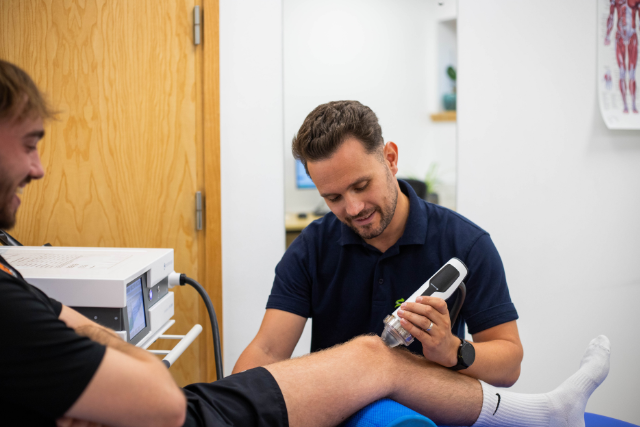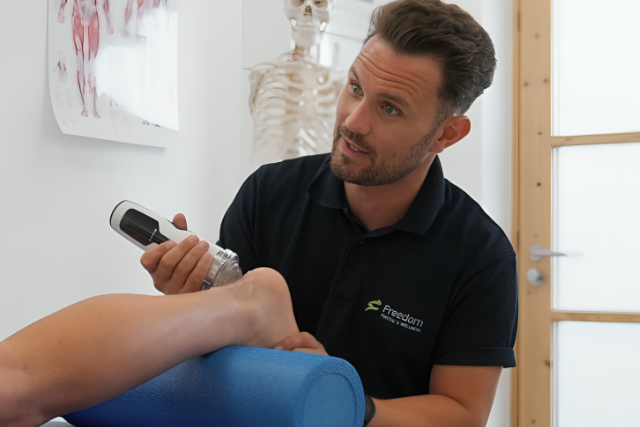
Shockwave therapy is a clinically used treatment that helps stimulate healing in stubborn tendon and soft tissue problems, especially when pain has lingered for weeks or months. It’s commonly used in physiotherapy for conditions like plantar fasciitis, tennis elbow, and Achilles tendinopathy, where the tissue needs a “kick-start” to recover.
If you’re considering the treatment in Jersey, this guide explains what it is, what it’s best for, what to expect, and when it’s most likely to work.
Book or learn more at our service page (what’s included, suitability, and how to get started): https://freedomphysiowellness.je/services/shockwave-treatment/
What is Shockwave Therapy?
Shockwave therapy (often called ESWT – Extracorporeal Shockwave Therapy) uses short pulses of mechanical energy delivered to the affected area. These pulses can help:
- Increase local blood flow
- Stimulate tissue repair processes
- Reduce pain sensitivity over time
- Support healing in chronic tendon issues
It’s non-surgical, doesn’t involve injections, and is usually done alongside a rehab plan (exercises + load management) for best results.

How does Shockwave Therapy work?
In simple terms, it sends targeted pressure waves into the painful tissue. This can encourage the body’s natural healing response, particularly in areas where healing has slowed down (common with tendons).
It may also help by “resetting” pain signalling locally, which is one reason some people notice gradual improvement across a few sessions rather than instant relief.
When does Shockwave Therapy work best?
It tends to work best for chronic problems (often 6+ weeks, sometimes 3+ months) where the tissue is irritated, degenerative, or struggling to settle.
Conditions it’s commonly used for
Shockwave Therapy is frequently used for:
- Plantar fasciitis / heel pain
- Achilles tendinopathy
- Tennis elbow (lateral epicondylitis)
- Golfer’s elbow (medial epicondylitis)
- Patellar tendinopathy (jumper’s knee)
- Gluteal tendinopathy / greater trochanteric pain
- Some types of shoulder calcific tendinopathy
It’s often considered when you’ve already tried sensible basics like activity modification, progressive strengthening, and hands-on treatment, without enough improvement.
External evidence overview: NICE has an evidence hub that includes ESWT across indications (helpful for credibility):
https://www.nice.org.uk/
When Shockwave Therapy is less likely to help
It isn’t a magic fix for every pain problem. It may be less effective when:
- The issue is very acute (new strain/sprain in the first few days)
- Pain is mainly coming from nerve irritation (e.g., sciatica-type symptoms)
- The real driver is joint instability or poor movement capacity that needs rehab first
- The diagnosis is unclear (you’re not sure what you’re treating)
This is why proper assessment matters, shockwave works best when it’s matched to the right condition and combined with the right rehab plan.
What happens during a Shockwave Therapy session?
A typical appointment looks like this:
- Assessment (to confirm it’s the right fit)
- Targeting the area (the clinician finds the most relevant tissue)
- Treatment (pressure waves delivered for a few minutes)
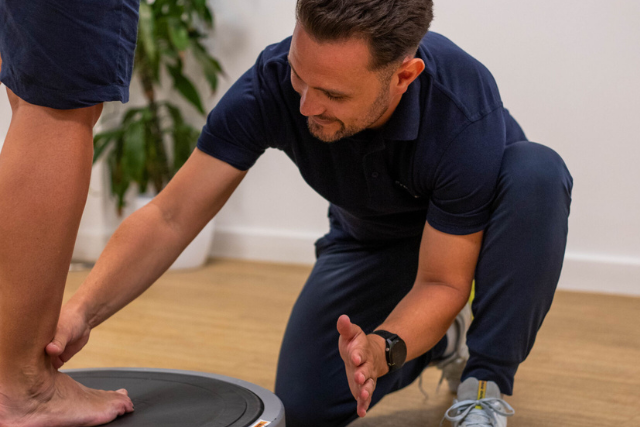
- Plan (rehab exercises + guidance on activity and recovery)
Does Shockwave Therapy hurt?
It can feel uncomfortable, especially over a sensitive tendon, but it’s usually tolerable. Most clinics adjust intensity to keep it within a manageable range.
How many sessions do you need?
Current research recommendations are 4–6 sessions, spaced about a week apart (exact plan depends on the condition and response). Improvement is often gradual, with changes building across weeks rather than overnight.
A good sign is when pain starts becoming less “reactive” after activity and daily symptoms slowly reduce.
What should you do after Shockwave Therapy?
To get the best results:
- Follow the exercise plan (this is where long-term change happens)
- Avoid suddenly ramping up high-impact activity for a day or two
- Track symptoms week-to-week rather than day-to-day
- Keep consistent with strength/loading work (especially for tendon issues)
If you’re looking for local treatment and a structured rehab approach, see Freedom Physio’s service page here:
https://freedomphysiowellness.je/services/shockwave-treatment/
Shockwave Therapy FAQs
Is Shockwave Therapy the same as ultrasound?
No. Ultrasound therapy uses sound waves mainly for heating/soft tissue effects. Shockwave uses higher-energy mechanical pulses designed to stimulate healing responses in stubborn tendon/soft tissue conditions.
How quickly does Shockwave Therapy work?
Some people feel early changes within 1–2 sessions, but it’s more common to see results over several weeks, especially for chronic tendon issues.
Is Shockwave Therapy safe?
It’s widely used and generally considered safe when delivered by a trained clinician, with appropriate screening and correct diagnosis.
Can Shockwave Therapy help plantar fasciitis?
It can be effective for chronic plantar fasciitis (persistent heel pain), particularly when paired with a progressive strengthening/loading plan.
Who should not have Shockwave Therapy?
This depends on medical screening (e.g., certain circulatory conditions, clotting issues, pregnancy in some cases, or specific local contraindications). A physiotherapy assessment should confirm suitability.
Key takeaways
Shockwave Therapy is a non-surgical treatment that can help stimulate healing in stubborn tendon and soft tissue pain.
It works best when the problem is chronic and the diagnosis is clear.
Most people need multiple sessions, and results tend to build gradually.
Best outcomes usually come from combining shockwave with a rehab plan.
Next step: If you want to check if it is appropriate for your condition, start here:
https://freedomphysiowellness.je/services/shockwave-treatment/